

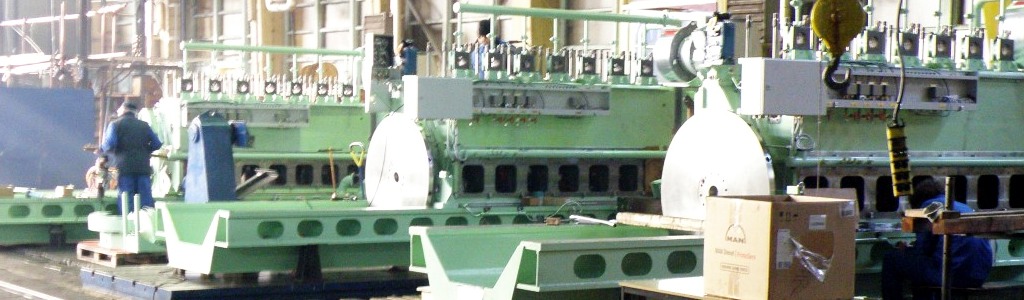
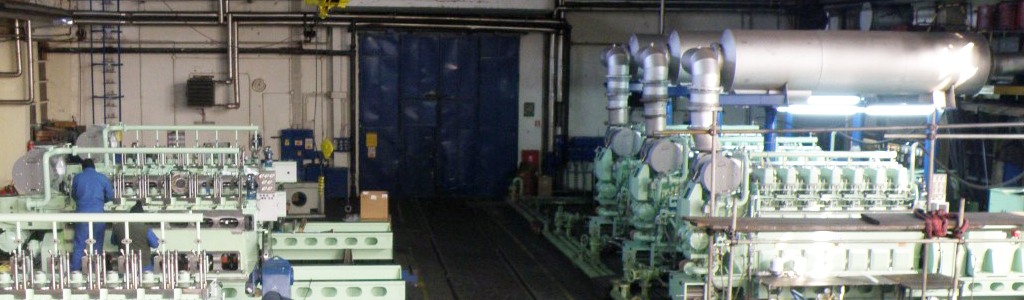
The concrete foundation, code 300945, is a fundamental structural element associated with the installation of the MAN L21/31 engine, providing the stable and load-bearing base required to support the engine and transmit its operational forces safely into the surrounding structure. A properly designed concrete foundation must accommodate the engine's static weight as well as dynamic forces arising from reciprocating and rotating components, combustion-related loading, vibration, and operating torque. Depending on the installation, the foundation may incorporate anchor bolts, embedded steel elements, mounting plates, grouting materials, and accurately prepared supporting surfaces to ensure correct positioning and alignment of the engine. Adequate structural strength, stiffness, dimensional accuracy, vibration characteristics, and compatibility with the engine's mounting arrangement are essential for preventing excessive movement, misalignment, settlement, and damage to associated equipment. During inspection and maintenance, the foundation should be checked for cracking, deterioration of concrete or grout, movement of anchor points, corrosion of embedded components, and changes in engine alignment. By providing a rigid and dependable supporting structure, the concrete foundation contributes to effective load distribution, controlled vibration, safe engine operation, and the long-term mechanical reliability of the MAN L21/31 installation.
The holding down bolt, code 101999, is a highly important structural fastening component used in the installation of the MAN L21/31 engine to secure the engine frame or associated mounting structure to its supporting foundation. Its primary function is to maintain a strong and stable connection between the engine and its foundation while resisting operational forces generated by engine vibration, dynamic loading, torque reactions, and thermal expansion. Correct bolt dimensions, material strength, anchoring arrangement, installation alignment, and specified tightening preload are essential for maintaining secure mounting conditions and preventing unwanted movement or loosening during operation. Depending on the installation design, the holding down bolt may work together with foundation plates, chocks, washers, nuts, and other mounting components to ensure effective transmission of mechanical loads into the supporting structure. During maintenance and overhaul, the bolt and its associated fastening elements should be inspected for corrosion, thread damage, elongation, cracking, loss of preload, and other signs of deterioration. By maintaining secure engine anchoring and supporting accurate alignment, the holding down bolt contributes to reduced vibration, structural stability, operational safety, and the long-term reliability of the MAN L21/31 engine.
The filling piece, code 101977, is a precisely dimensioned component of the MAN L21/31 engine designed to occupy a defined space within an assembly and thereby provide the required support, spacing, positioning, or load distribution between associated components. Depending on its particular installation location, the filling piece may compensate for a designed gap, establish the correct relative position of adjoining parts, provide a stable contact surface, or help transfer mechanical forces through the assembly. Dimensional accuracy, surface condition, material strength, and correct positioning are particularly important because an incorrectly fitted or damaged filling piece can alter clearances, alignment, contact patterns, or load distribution. During maintenance and overhaul, the component and its mating surfaces should therefore be inspected for wear, deformation, corrosion, fretting, surface damage, and dimensional deviations before reassembly. By maintaining the specified geometry and mechanical relationship between associated parts, the filling piece contributes to accurate assembly, structural stability, reduced unwanted movement, reliable load transfer, and the dependable long-term operation of the MAN L21/31 engine.
The casing 156971 is a structural enclosure and supporting component used within the MAN L21/31 engine, designed to provide mechanical protection, accurate positioning, and a stable interface for the associated internal or adjoining components. Depending on its position within the engine assembly, the casing may also incorporate accurately machined bores, mounting faces, internal spaces, or connection points required for the proper operation of the corresponding system. Its dimensional stability and structural integrity are particularly important because deformation, cracking, excessive wear, or damage to mounting and sealing surfaces can affect component alignment, clearances, sealing, and overall system reliability. During engine operation, the 156971 casing may be exposed to vibration, mechanical loads, temperature variations, and prolonged service conditions, making correct installation and periodic inspection essential. During overhaul, particular attention should be given to mounting surfaces, bores, threaded connections, sealing areas, and structural sections for signs of wear, corrosion, cracking, distortion, or fretting. By maintaining a stable and accurately dimensioned structural environment for the associated components, the 156971 casing contributes to correct assembly alignment, reliable system operation, reduced mechanical wear, and dependable long-term performance of the MAN L21/31 engine.
The welded support 256967 is a structural component of the MAN L21/31 engine designed to provide a strong and stable mounting or supporting interface for the associated engine equipment or assembly. Its welded construction allows individual structural sections to form a rigid unit capable of transmitting mechanical loads into the surrounding engine structure while maintaining the required position and alignment of the supported components. Because the support operates in an environment characterized by continuous engine vibration, cyclic loading, temperature changes, and extended service periods, the quality and integrity of the welded joints are particularly important for long-term reliability. Correct geometry and alignment are also essential, since distortion or damage can introduce unwanted stresses into mounted components and their connections. During overhaul, the 256967 welded support should be inspected carefully for cracking around welds, corrosion, deformation, fretting at mounting points, damaged fastening areas, or other indications of fatigue. By providing a rigid and dependable structural foundation, the 256967 welded support contributes to correct equipment positioning, controlled load transfer, reduced vibration-related movement, and reliable operation of the MAN L21/31 engine.
The support 356967 is an important structural and positioning component used within the MAN L21/31 engine, where it provides stable mechanical support for the associated assembly and helps maintain the correct position and alignment of connected components during operation. Although supports are often relatively simple in appearance, their dimensional accuracy, rigidity, mounting geometry, and condition are important because unwanted movement or misalignment can increase vibration, create uneven loading, and accelerate wear of neighboring parts. In the demanding environment of a medium-speed diesel engine, the 356967 support may be exposed to continuous vibration, cyclic mechanical loads, temperature variations, and prolonged operating periods, requiring dependable mechanical strength and dimensional stability. During maintenance or overhaul, its mounting surfaces, fastening points, contact areas, and overall geometry should be inspected for cracks, deformation, corrosion, fretting, or other signs of deterioration. By providing a secure and accurately positioned structural interface, the 356967 support contributes to stable component installation, reduced vibration and mechanical stress, and dependable long-term operation of the MAN L21/31 engine.
The outlet pipe for control V, code 356993, is a dedicated piping component of the MAN L21/31 engine designed to convey the relevant operating medium away from the associated control valve or control arrangement in a controlled and reliable manner. Depending on the specific system configuration, the pipe may form part of a pneumatic, hydraulic, lubricating, fuel, or other auxiliary circuit and must maintain an unrestricted flow path while withstanding the applicable pressure, temperature, vibration, and mechanical stresses. Correct pipe geometry, secure connections, suitable material properties, clean internal passages, and reliable sealing at the connection points are essential for preventing leakage, pressure loss, flow restriction, and malfunction of the associated control system. During maintenance and overhaul, the outlet pipe should be inspected for cracking, corrosion, erosion, deformation, contamination, blockage, damaged connections, and signs of vibration-related fatigue or leakage. By ensuring dependable discharge or transfer of the operating medium from the associated control arrangement, the outlet pipe supports correct system response, stable control functions, operational safety, and the reliable long-term performance of the MAN L21/31 engine.
The hexagonal head bolt, code 100100, is a fundamental mechanical fastening component used throughout the MAN L21/31 engine to create strong and serviceable connections between associated parts and assemblies. Its hexagonal head allows controlled tightening and loosening with suitable tools, while the threaded section develops the clamping force required to hold the connected components securely in their specified positions. During engine operation, such a bolt may be subjected to substantial tensile and shear forces, vibration, cyclic loading, and temperature variations, making material strength, thread accuracy, dimensional precision, surface condition, and correct tightening particularly important. The specified tightening procedure and torque should be observed to establish the required preload without overstressing the bolt, mating threads, or connected components. During maintenance, the bolt should be checked for thread damage, corrosion, deformation, elongation, cracking, damaged head surfaces, or other signs of deterioration. By maintaining a strong and correctly preloaded mechanical connection, the hexagonal head bolt supports structural integrity, safe operation, efficient maintenance, and the long-term reliability of the MAN L21/31 engine.
The washer, code 300100, is an important fastening component used in the MAN L21/31 engine to provide a stable contact surface beneath a bolt head, nut, or other fastening element and to distribute the applied clamping force over a larger area. Depending on its specific installation position, the washer can help protect the adjoining component surface from local deformation, indentation, or wear while supporting the correct preload and stability of the bolted connection. In a medium-speed diesel engine, fastening components are exposed to continuous vibration, cyclic mechanical loads, temperature variations, and demanding operating conditions, making correct washer dimensions, material strength, hardness, surface condition, and installation particularly important. During maintenance and overhaul, the washer should be inspected for deformation, cracking, corrosion, excessive wear, damaged contact surfaces, or other deterioration before reuse. By promoting uniform load distribution and helping maintain a secure fastening arrangement, the washer contributes to mechanical stability, reliable assembly, reduced risk of connection damage, and the long-term operational reliability of the MAN L21/31 engine.
The welded support, code 256967, is a structural component of the MAN L21/31 engine designed to provide stable mounting, positioning, and mechanical support for an associated engine part, pipe, system component, or assembly. Its welded construction allows individual structural elements to form a rigid support capable of carrying the specified static and dynamic loads while maintaining the required position of the supported component during engine operation. Because the support may be exposed to continuous vibration, cyclic mechanical stresses, temperature variations, and environmental influences, the quality of the welds, dimensional accuracy, material strength, mounting points, and overall structural condition are particularly important. During inspection and overhaul, the support should be checked for cracking, especially around welded joints and highly stressed areas, as well as for deformation, corrosion, loose fasteners, or other signs of deterioration. By securely supporting and positioning the associated components, the welded support helps reduce unwanted movement and vibration, protects connected systems from excessive mechanical stress, and contributes to the structural stability and long-term reliability of the MAN L21/31 engine.