

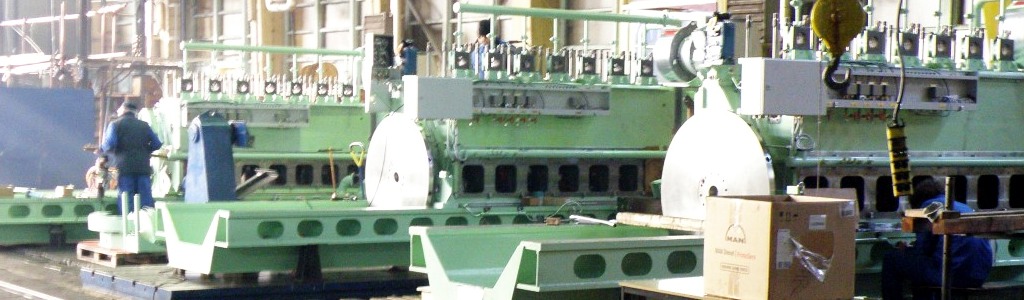
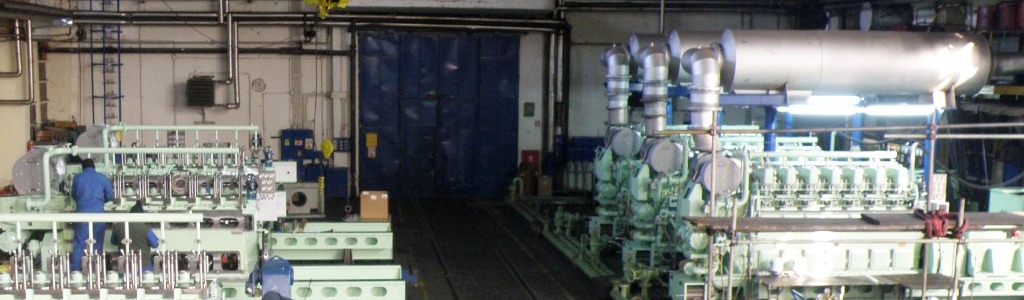
The resilient mounting arrangement, code HD1903, is an important vibration-isolation system associated with the installation of the MAN L21/31 engine, designed to provide stable mechanical support while reducing the transmission of engine-generated vibration and dynamic forces to the surrounding foundation or supporting structure. Depending on the installation design, the arrangement may incorporate elastomeric elements, steel springs, or other engineered resilient supports that allow limited controlled movement while maintaining the required engine position and load distribution. Effective resilient mounting helps minimize structure-borne noise, reduce vibration-related stresses in adjacent equipment and piping, and improve operating conditions for the engine and surrounding machinery. Correct selection of mounting stiffness, load capacity, natural frequency, damping characteristics, and installation geometry is essential to avoid excessive movement, resonance, or uneven load distribution. During maintenance, the mounting elements should be inspected for deformation, cracking, material deterioration, corrosion, loss of elasticity, incorrect alignment, and damage to associated fastening components. By combining reliable engine support with effective vibration isolation, the resilient mounting arrangement contributes to reduced mechanical fatigue, improved operational stability, protection of connected equipment, and the long-term reliability of the MAN L21/31 engine installation.
The holding down bolts arrangement, code 301990, is an essential engine installation and fastening system designed to secure the MAN L21/31 engine frame or mounting structure firmly to its supporting foundation. This arrangement typically incorporates foundation bolts, nuts, washers, and associated mounting elements that work together to maintain the specified clamping force, preserve engine alignment, and transmit operational loads safely into the foundation. During engine operation, the fastening system must withstand dynamic forces generated by combustion, rotating and reciprocating components, torque reactions, vibration, and thermal expansion without allowing excessive movement or loss of preload. Correct positioning of the bolts, accurate alignment of the mounting surfaces, suitable material properties, proper anchoring, and tightening according to the prescribed procedures are essential for reliable installation. During maintenance and overhaul, the arrangement should be inspected for loose fasteners, corrosion, damaged threads, bolt elongation, cracking, deterioration of mounting surfaces, and changes in engine alignment. By maintaining secure anchoring and effective load distribution, the holding down bolts arrangement contributes to structural stability, controlled vibration, operational safety, and the long-term reliability of the MAN L21/31 engine.
The conical element, code HP1903, is a precision-engineered component of the MAN L21/31 engine whose tapered geometry is designed to provide accurate positioning, centering, seating, or controlled mechanical engagement within its associated assembly. A conical interface can be particularly effective in establishing repeatable alignment and distributing contact forces over the mating surfaces when the component is correctly installed and loaded. Depending on its specific application, the conical element may therefore contribute to secure component location, controlled transmission of mechanical forces, or reliable connection between adjoining parts. Precision of the taper angle, surface finish, dimensional accuracy, material strength, and condition of the mating surfaces are important because wear, scoring, corrosion, contamination, or deformation can adversely affect seating and alignment. During maintenance, the conical surfaces and associated contact areas should be carefully inspected and cleaned before assembly. By supporting precise positioning and stable mechanical engagement, the conical element contributes to accurate assembly, reduced unwanted movement, reliable load transfer, and the long-term mechanical reliability of the MAN L21/31 engine.
The piston K 43555 is an important moving and pressure-responsive component of the automatic starting-air stop valve used in the starting-air system of the Adriadiesel/Jugoturbina/Zgoda/Sulzer ZV40/48 engine. Its primary function is to convert the applied pneumatic pressure into controlled mechanical movement within the valve assembly, supporting the automatic opening or closing of the starting-air passage according to the operating conditions and control sequence of the engine starting system. Working in coordination with the associated valve seat, sealing elements, and guiding surfaces, the piston helps ensure accurate valve response and reliable regulation of compressed-air flow during starting operations. Correct piston diameter, surface finish, dimensional tolerances, and compatibility with the corresponding cylinder bore and sealing elements are essential because excessive clearance, friction, contamination, or seal deterioration can cause internal leakage, sticking, delayed response, or incomplete valve movement. During operation, the K 43555 piston is subjected to repeated pressure cycles, axial movement, mechanical loading, vibration, and extended periods of standby readiness, requiring resistance to wear, corrosion, deformation, and surface damage. During maintenance or overhaul, the piston and its associated guiding and sealing surfaces should be inspected for scoring, uneven wear, corrosion, deposits, dimensional deviations, and restricted movement, with particular attention to the condition of the related seals and mating components. By ensuring accurate pressure-actuated movement and dependable operation of the automatic starting-air stop valve, the K 43555 piston contributes to reliable starting-air control, efficient compressed-air utilization, reduced mechanical wear, and long-term operational reliability of the ZV40/48 engine.
The valve seat K 43554 is a precision sealing and flow-control component of the automatic starting-air stop valve used in the Adriadiesel/Jugoturbina/Zgoda/Sulzer ZV40/48 engine starting-air system. Its principal function is to provide a precisely machined contact surface against which the corresponding valve element closes, ensuring effective sealing and preventing unwanted compressed-air flow when the automatic starting-air stop valve is in its closed position. The geometry, concentricity, surface finish, and dimensional accuracy of the valve seat are particularly important because even minor irregularities, erosion, pitting, or uneven contact can compromise sealing performance and cause compressed-air leakage. During engine starting, the K 43554 valve seat is exposed to repeated opening and closing cycles, pressure forces, mechanical seating impacts, vibration, and possible contamination carried by the compressed-air supply, requiring dependable wear resistance and dimensional stability. During maintenance or overhaul, the seating surface should be carefully examined for scoring, corrosion, erosion, deposits, deformation, and irregular contact patterns, while the condition of the mating valve element should also be checked to ensure proper sealing. Any restoration or replacement must comply with the manufacturer's specified dimensions, surface requirements, and inspection procedures. By providing a reliable sealing interface and supporting accurate valve operation, the K 43554 valve seat contributes to effective isolation of the starting-air supply, reduced air leakage, stable starting-system performance, and dependable operational readiness of the ZV40/48 engine.
The casing K 43552 is an essential structural and pressure-containing component of the automatic starting-air stop valve used in the starting-air system of the Adriadiesel/Jugoturbina/Zgoda/Sulzer ZV40/48 engine. Its primary function is to provide a robust and precisely machined enclosure for the internal valve components, ensuring their correct positioning, alignment, and protection while maintaining the pressure integrity required for reliable starting-air control. The casing accommodates the associated valve seat, piston, and other operating components, providing the internal passages and supporting surfaces necessary for controlled admission and interruption of compressed air during engine starting. Accurate machining of internal bores, seating surfaces, threaded connections, and sealing interfaces is particularly important because dimensional inaccuracies, deformation, or surface damage can lead to air leakage, restricted component movement, or improper valve operation. During service, the K 43552 casing is subjected to repeated compressed-air pressure cycles, mechanical stresses, vibration, temperature variations, and extended periods of standby readiness, requiring high mechanical strength, dimensional stability, and resistance to corrosion and fatigue. During maintenance or overhaul, the casing should be carefully inspected for cracks, corrosion, worn guiding surfaces, damaged threads, deposits, deformation, and deterioration of sealing areas, with particular attention to the condition of the internal passages and mounting interfaces. By providing a secure and accurately dimensioned housing for the automatic starting-air stop valve, the K 43552 casing contributes to dependable valve operation, controlled starting-air distribution, reduced compressed-air losses, and reliable long-term starting performance of the ZV40/48 engine.
The welding plate, code 750808, is a structural fabrication and attachment component used in connection with the MAN L21/31 engine to provide a suitable surface or reinforcement for welded connections between associated parts, supports, or mounting structures. Depending on its specific application, the welding plate may serve as an attachment point, distribute mechanical loads across a welded joint, strengthen a supporting structure, or facilitate the secure positioning of connected components. Because engine installations are exposed to continuous vibration, cyclic mechanical stresses, temperature changes, and operational forces, the welding plate must possess suitable material properties, dimensional accuracy, adequate thickness, and a surface condition appropriate for the specified welding procedure. Correct preparation of the joint, selection of compatible welding consumables, control of welding parameters, and inspection of the completed welds are essential for preventing cracking, distortion, insufficient penetration, or premature fatigue damage. During maintenance, the plate and surrounding welded areas should be examined for corrosion, deformation, cracking, and other signs of deterioration. By supporting strong and reliable welded connections, the welding plate contributes to structural stability, effective load distribution, secure component mounting, and the long-term mechanical reliability of the MAN L21/31 engine.
The casing, code 100100, is an important structural and protective component associated with the MAN L21/31 engine, designed to enclose, support, or protect internal mechanical elements and maintain the required operating conditions within its particular assembly. Depending on its installation position, the casing may provide a rigid housing for moving or stationary components, maintain precise alignment between associated parts, contain lubricating oil or other operating media, or protect sensitive mechanisms from external contamination and mechanical damage. During engine operation, the casing may be subjected to vibration, mechanical loading, temperature variations, internal pressure, and exposure to lubricants or other fluids, making material strength, dimensional accuracy, surface finish, and reliable sealing particularly important. During maintenance and overhaul, the casing should be carefully inspected for cracks, deformation, corrosion, wear, damaged mounting surfaces, and leakage around joints or sealing areas. By providing structural support, protection, and stable operating conditions for the enclosed components, the casing contributes to efficient maintenance, operational safety, reduced mechanical wear, and the dependable long-term performance of the MAN L21/31 engine.
The welded support, code 256967, is a structural component of the MAN L21/31 engine designed to provide stable mounting, positioning, and mechanical support for an associated engine part, pipe, system component, or assembly. Its welded construction allows individual structural elements to form a rigid support capable of carrying the specified static and dynamic loads while maintaining the required position of the supported component during engine operation. Because the support may be exposed to continuous vibration, cyclic mechanical stresses, temperature variations, and environmental influences, the quality of the welds, dimensional accuracy, material strength, mounting points, and overall structural condition are particularly important. During inspection and overhaul, the support should be checked for cracking, especially around welded joints and highly stressed areas, as well as for deformation, corrosion, loose fasteners, or other signs of deterioration. By securely supporting and positioning the associated components, the welded support helps reduce unwanted movement and vibration, protects connected systems from excessive mechanical stress, and contributes to the structural stability and long-term reliability of the MAN L21/31 engine.
The complete automatic starting-air stop valve K 43551 is a key control and safety-related component of the starting-air system of the Adriadiesel/Jugoturbina/Zgoda/Sulzer ZV40/48 engine, responsible for automatically controlling the admission and interruption of compressed air supplied to the engine starting equipment. As a complete valve assembly, it incorporates the components required for controlled opening, secure closing, and reliable sealing under the operating conditions of the starting-air system. During engine starting, the valve operates in coordination with the associated pneumatic or mechanical control arrangements to permit the required airflow, while its closing function helps isolate the starting-air supply when the starting sequence is completed or when the relevant control conditions require closure. Reliable operation depends on correct internal clearances, accurate guiding and seating surfaces, effective seals, and unrestricted movement of the valve's operating components. The K 43551 is exposed to repeated compressed-air pressure cycles, mechanical forces, vibration, temperature variations, and long standby periods, making resistance to wear, corrosion, contamination, and sticking particularly important. During maintenance or overhaul, the valve assembly should be inspected for leakage, worn seating surfaces, damaged seals, corrosion, deposits, restricted movement, and deterioration of associated control components, followed by functional testing in accordance with the manufacturer's instructions. By ensuring dependable automatic opening and closing of the starting-air supply, the K 43551 valve contributes to reliable engine starting, reduced compressed-air losses, protection of the starting system, and long-term operational reliability of the ZV40/48 engine.