

The complete starting device K 43100 is an essential functional assembly of the Adriadiesel/Jugoturbina/Zgoda/Sulzer ZV40/48 engine, designed to support the controlled starting sequence and enable the engine to accelerate from standstill toward self-sustaining operation. As part of the engine's starting system, the complete device incorporates precisely coordinated mechanical components that must operate reliably and in the correct sequence whenever an engine start is initiated. Because starting places considerable demands on the associated mechanisms, the K 43100 must withstand repeated operating cycles, pressure and mechanical forces, vibration, temperature variations, and long periods of service readiness. Correct movement, sealing, clearances, lubrication where applicable, and condition of the internal components are therefore important for dependable operation. During maintenance or overhaul, the complete starting device should be inspected for wear, corrosion, sticking, leakage, damaged sealing surfaces, and deterioration of its moving or retaining components. By providing reliable and repeatable operation during the starting sequence, the K 43100 starting device contributes to dependable engine starting, operational readiness, reduced risk of starting-system malfunction, and long-term reliability of the ZV40/48 engine.
The lapped bearing ring halves K 42611 are precision-finished bearing components designed for the camshaft lapped-bearing arrangement of the Adriadiesel/Jugoturbina/Zgoda/Sulzer ZV40/48 engine. Their carefully finished mating and bearing surfaces are intended to provide accurate contact, alignment, and support for the camshaft while maintaining the controlled running conditions required within the bearing assembly. The lapping process produces closely matched surfaces with a high degree of dimensional and surface accuracy, helping achieve uniform contact and dependable load distribution when the bearing halves are correctly assembled. During engine operation, these components must accommodate continuous camshaft rotation, cyclic bearing loads, vibration, and long-term service while preserving the required geometry and running clearance. Correct pairing and installation of the bearing ring halves, suitable lubrication, and careful inspection are therefore particularly important; wear, scoring, fretting, deformation, or damage to the precision-finished surfaces can adversely affect bearing performance and camshaft alignment. By providing accurately matched support within the camshaft bearing assembly, the K 42611 lapped bearing ring halves contribute to smooth camshaft rotation, controlled bearing loads, reduced wear, precise timing, and dependable long-term operation of the ZV40/48 engine.
The camshaft bearing shell halves K 42601 are precision bearing components designed to support and guide the camshaft of the Adriadiesel/Jugoturbina/Zgoda/Sulzer ZV40/48 engine while allowing smooth rotation under continuous operating loads. Installed as complementary bearing halves around the corresponding camshaft journal, they provide the accurately dimensioned running surface required to maintain correct shaft alignment, distribute bearing loads, and minimize friction between the rotating camshaft and its supporting structure. Because the camshaft is continuously exposed to cyclic forces generated by the valve and fuel-control mechanisms, the condition of its bearings is essential for maintaining stable timing and preventing excessive shaft movement. The K 42601 bearing shell halves therefore require accurate geometry, suitable bearing properties, correct clearances, clean lubrication, and proper installation to achieve reliable service life. During overhaul, the bearing surfaces should be inspected for scoring, wiping, abnormal wear, overheating, contamination, or changes in running clearance, together with the condition of the corresponding camshaft journals. By supporting accurate camshaft rotation and maintaining the required bearing clearances, the K 42601 bearing shell halves contribute to reduced friction, correct camshaft alignment, stable engine timing, and long-term reliability of the ZV40/48 engine.
The valve cam K 42160 is a precision timing and control component mounted on the camshaft of the Adriadiesel/Jugoturbina/Zgoda/Sulzer ZV40/48 engine, where it plays an essential role in controlling the mechanical operation of the corresponding valve mechanism. Its accurately defined cam profile converts camshaft rotation into precisely timed movement, helping ensure that the associated valve opens and closes at the required points of the engine operating cycle and follows the intended lift characteristics. Because valve timing directly influences gas exchange and overall engine performance, the geometry, angular position, surface finish, and dimensional accuracy of the K 42160 are particularly important. During operation, the valve cam is subjected to repeated contact stresses, cyclic loading, friction, vibration, and prolonged heavy-duty service, requiring good wear resistance, correct alignment, and effective lubrication of the associated contact surfaces. During overhaul, the cam profile and mating components should be inspected for wear, pitting, scoring, deformation, or other surface damage that could alter valve motion. By providing accurate and repeatable mechanical control of the valve mechanism, the K 42160 valve cam contributes to correct valve timing, efficient gas exchange, stable engine operation, and dependable long-term performance of the ZV40/48 engine.
The fuel cam K 42150 is a precision timing and control component mounted on the camshaft of the Adriadiesel/Jugoturbina/Zgoda/Sulzer ZV40/48 engine and plays an important role in the mechanical control of the fuel-injection process. Its carefully defined cam profile converts camshaft rotation into precisely timed mechanical movement for the associated fuel-injection mechanism, helping ensure that fuel delivery occurs at the required point in the engine operating cycle. The geometry, angular position, surface finish, and dimensional accuracy of the fuel cam are therefore critical, as wear or deformation of the working profile can alter the movement of the associated mechanism and adversely affect injection timing and engine performance. During operation, the K 42150 fuel cam is subjected to repeated contact stresses, cyclic loading, friction, vibration, and long periods of heavy-duty service, making wear resistance, effective lubrication of the associated contact surfaces, and correct alignment particularly important. During overhaul, the cam profile and its mating components should be inspected for wear, pitting, scoring, surface damage, or dimensional deviations. By providing accurate and repeatable mechanical control of the fuel-injection mechanism, the K 42150 fuel cam contributes to correct injection timing, stable combustion, efficient engine operation, and dependable long-term performance of the ZV40/48 engine.
The self-locking nut K 42114 is an important securing component designed for the camshaft assembly of the Adriadiesel/Jugoturbina/Zgoda/Sulzer ZV40/48 engine. Its primary function is to maintain a reliable threaded connection and the required clamping force while resisting unintended loosening caused by continuous engine vibration, cyclic mechanical loading, and repeated operating stresses. Secure fastening is particularly important in the camshaft system because any loss of clamping integrity or component positioning can affect alignment, increase mechanical movement and wear, and potentially influence the accuracy of engine timing. The K 42114 therefore requires precise thread geometry, adequate mechanical strength, dimensional stability, and dependable self-locking characteristics throughout its intended service life. During maintenance or overhaul, the nut and its mating threads should be examined for thread damage, deformation, corrosion, wear, or deterioration of the locking function, and replacement should be considered whenever secure locking can no longer be assured. By maintaining a stable and vibration-resistant fastening within the camshaft assembly, the K 42114 self-locking nut contributes to accurate component positioning, reliable camshaft operation, reduced risk of loosening, and long-term reliability of the ZV40/48 engine.
The fitted bolt K 42113 is a precision fastening and locating component designed for the camshaft assembly of the Adriadiesel/Jugoturbina/Zgoda/Sulzer ZV40/48 engine. Unlike a conventional fastening bolt, a fitted bolt is intended not only to provide secure clamping but also to ensure accurate relative positioning of the connected components through its precisely dimensioned fitted section. This is particularly important in a camshaft assembly, where alignment and angular accuracy directly influence the correct timing and operation of the associated engine mechanisms. During service, the K 42113 fitted bolt must withstand cyclic mechanical loads, vibration, shear forces, and prolonged heavy-duty operation without developing excessive clearance or deformation. Accurate dimensions, correct surface condition, suitable mechanical strength, and proper installation are therefore essential for reliable performance. During overhaul, the bolt, fitted bore, threads, and mating surfaces should be inspected carefully for wear, fretting, deformation, corrosion, or other damage. By combining secure fastening with precise component location, the K 42113 fitted bolt contributes to accurate camshaft alignment, stable timing, reduced unwanted movement, and dependable long-term operation of the ZV40/48 engine.
The stopper ring K 42111 is a precision retaining and positioning component designed for the camshaft assembly of the Adriadiesel/Jugoturbina/Zgoda/Sulzer ZV40/48 engine. Its principal function is to help maintain the camshaft or an associated component in its specified axial position, restricting unwanted displacement and preserving the correct mechanical relationship between the camshaft, bearings, drive components, and neighboring parts. Although relatively simple in form, the stopper ring performs an important role because excessive axial movement can affect alignment, bearing conditions, gear engagement, and ultimately the accuracy and reliability of the camshaft mechanism. The K 42111 must therefore maintain its dimensional integrity and secure seating despite continuous vibration, cyclic mechanical loading, and long periods of engine operation. During overhaul, the stopper ring, its locating groove or seating surface, and the associated camshaft components should be inspected for wear, deformation, cracking, or other damage that could compromise retention. By maintaining controlled axial positioning of the camshaft assembly, the K 42111 stopper ring contributes to accurate alignment, stable camshaft operation, reduced mechanical wear, and dependable long-term performance of the ZV40/48 engine.
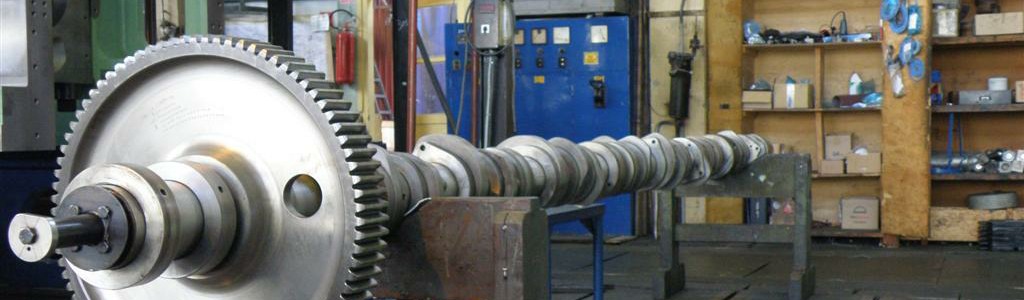
The toothed wheel K 42110 is an important power-transmission and timing component associated with the camshaft of the Adriadiesel/Jugoturbina/Zgoda/Sulzer ZV40/48 engine. Its primary function is to transmit rotational motion through the camshaft drive system while preserving the precise mechanical relationship required for correct synchronization of the camshaft with the engine operating cycle. Accurate tooth profile, pitch, concentricity, alignment, and running clearances are particularly important because progressive tooth wear, incorrect backlash, or misalignment can lead to irregular gear engagement, increased vibration and noise, and deterioration of timing accuracy. The K 42110 toothed wheel must withstand repeated tooth loading, continuous rotation, vibration, and extended heavy-duty service while operating under appropriate lubrication conditions. During maintenance and overhaul, the tooth flanks, bore and mounting surfaces, alignment, backlash, and lubrication condition should be inspected carefully for abnormal wear or damage. By providing accurate and reliable transmission of rotational movement to the camshaft, the K 42110 toothed wheel contributes to precise engine timing, smooth operation, reduced wear of associated drive components, and long-term reliability of the ZV40/48 engine.
The right-hand camshaft K 42104, located on the damper side, is a critical timing and mechanical-control component of the Adriadiesel/Jugoturbina/Zgoda/Sulzer ZV40/48 engine. Its principal function is to convert precisely synchronized rotary motion into the controlled mechanical actions required by the corresponding engine mechanisms, ensuring that these functions occur at the correct stages of the operating cycle. The geometry and angular positioning of the cam profiles, together with shaft straightness, journal dimensions, bearing clearances, and correct alignment with the camshaft drive, are essential for maintaining accurate engine timing and consistent performance. During heavy-duty marine and stationary operation, the K 42104 camshaft is subjected to repeated contact stresses, torsional loads, vibration, bearing forces, and prolonged continuous service, making effective lubrication, wear resistance, and dimensional stability particularly important. During overhaul, the cam profiles, journals, bearing surfaces, drive connections, and lubrication passages should be carefully inspected for wear, scoring, deformation, or other abnormalities. By providing precise and repeatable mechanical control on the damper side, the K 42104 right-hand camshaft contributes to correct engine timing, stable operation, reduced mechanical wear, and dependable long-term performance of the ZV40/48 engine.