

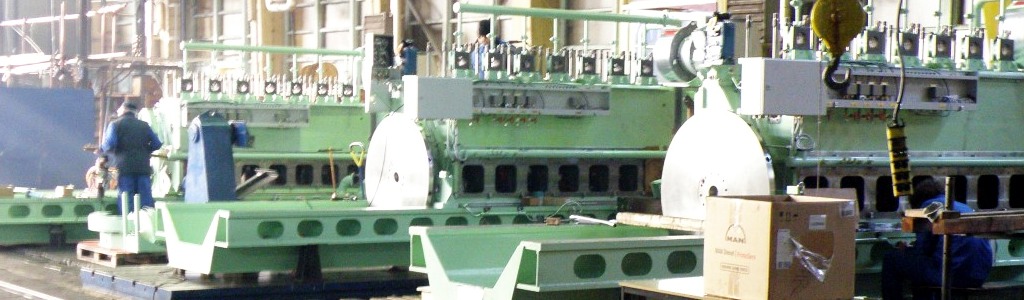
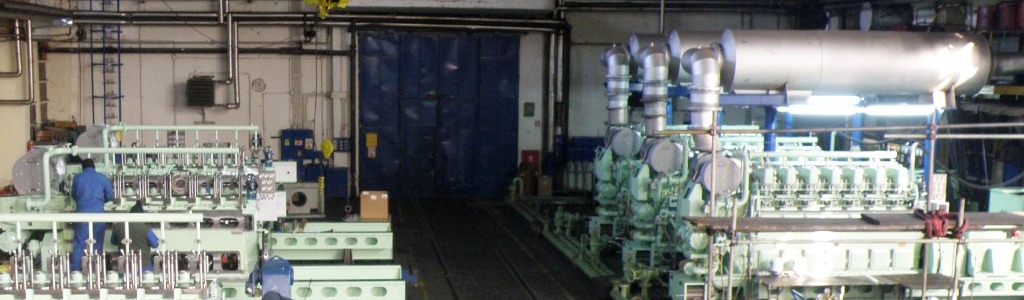
The glues, code 395956, refer to specialized industrial adhesives and securing compounds specified for particular assembly, maintenance, and repair operations on the MAN L21/31 engine. Depending on the application, these products may be used for thread locking, retaining cylindrical components, sealing threaded or mating connections, securing assembled parts, or providing additional resistance against loosening and leakage. Adhesives intended for engine service must be selected according to the specific application and should provide appropriate resistance to vibration, temperature variations, lubricating oil, fuel, moisture, and other operating media or environmental influences to which the joint may be exposed. Thorough cleaning and preparation of the bonding surfaces, correct application quantity, suitable assembly conditions, and observance of the required curing time are essential for obtaining the intended performance. When correctly selected and applied according to the prescribed procedure, these glues can improve connection security, support effective sealing, reduce maintenance-related problems, and contribute to the dependable and long-term operation of the MAN L21/31 engine.
The locking spring washer, code 515151, is a resilient fastening component used in the MAN L21/31 engine to help secure bolted connections against loosening caused by vibration, cyclic loads, thermal expansion, and other dynamic operating influences. Its spring characteristics allow it to exert an elastic reaction within the fastening arrangement, helping maintain contact and supporting the required clamping effect when the connection is correctly assembled. Because medium-speed diesel engines operate under continuous vibration and changing mechanical and thermal loads, the condition, elasticity, dimensions, and material strength of such a washer are important for dependable fastening performance. Correct positioning and tightening according to the specified assembly procedure are essential, while damaged, permanently deformed, cracked, heavily corroded, or fatigued washers should not be relied upon to provide their intended securing function. By supporting the stability of critical bolted connections, the locking spring washer helps reduce the possibility of unintended loosening, improves mechanical security, and contributes to the safe and reliable long-term operation of the MAN L21/31 engine.
The lock washer, code 100100, is an important fastening and securing component used in the MAN L21/31 engine to help maintain the integrity of bolted or threaded connections under demanding operating conditions. Its primary purpose is to reduce the risk of unintended loosening caused by engine vibration, cyclic mechanical loading, temperature variations, and repeated operational stresses. Depending on the particular fastening arrangement, the lock washer provides an additional securing effect between the fastener and the adjoining surface, helping preserve the required clamping force and stability of the connection. Correct dimensions, suitable material properties, proper surface condition, and installation in accordance with the specified assembly procedure are essential for reliable performance. During maintenance, the washer should be inspected for deformation, cracking, corrosion, excessive wear, or loss of its locking capability before reuse. By helping prevent fastener loosening and maintaining secure mechanical connections, the lock washer contributes to operational safety, reduced maintenance risk, and the long-term reliability of the MAN L21/31 engine.
The stopper ring K 42111 is a precision retaining and positioning component designed for the camshaft assembly of the Adriadiesel/Jugoturbina/Zgoda/Sulzer ZV40/48 engine. Its principal function is to help maintain the camshaft or an associated component in its specified axial position, restricting unwanted displacement and preserving the correct mechanical relationship between the camshaft, bearings, drive components, and neighboring parts. Although relatively simple in form, the stopper ring performs an important role because excessive axial movement can affect alignment, bearing conditions, gear engagement, and ultimately the accuracy and reliability of the camshaft mechanism. The K 42111 must therefore maintain its dimensional integrity and secure seating despite continuous vibration, cyclic mechanical loading, and long periods of engine operation. During overhaul, the stopper ring, its locating groove or seating surface, and the associated camshaft components should be inspected for wear, deformation, cracking, or other damage that could compromise retention. By maintaining controlled axial positioning of the camshaft assembly, the K 42111 stopper ring contributes to accurate alignment, stable camshaft operation, reduced mechanical wear, and dependable long-term performance of the ZV40/48 engine.
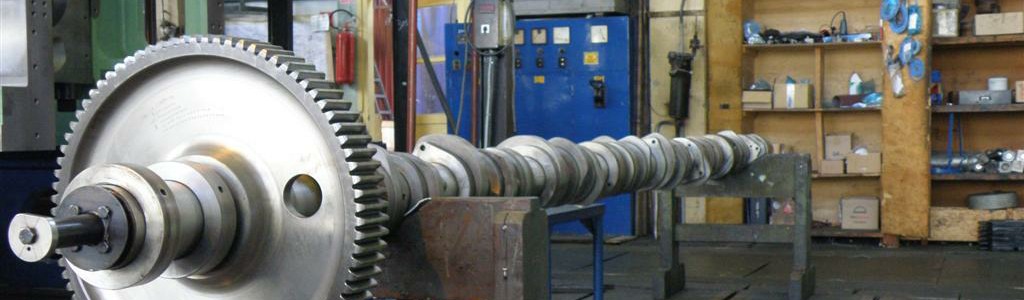
The toothed wheel K 42110 is an important power-transmission and timing component associated with the camshaft of the Adriadiesel/Jugoturbina/Zgoda/Sulzer ZV40/48 engine. Its primary function is to transmit rotational motion through the camshaft drive system while preserving the precise mechanical relationship required for correct synchronization of the camshaft with the engine operating cycle. Accurate tooth profile, pitch, concentricity, alignment, and running clearances are particularly important because progressive tooth wear, incorrect backlash, or misalignment can lead to irregular gear engagement, increased vibration and noise, and deterioration of timing accuracy. The K 42110 toothed wheel must withstand repeated tooth loading, continuous rotation, vibration, and extended heavy-duty service while operating under appropriate lubrication conditions. During maintenance and overhaul, the tooth flanks, bore and mounting surfaces, alignment, backlash, and lubrication condition should be inspected carefully for abnormal wear or damage. By providing accurate and reliable transmission of rotational movement to the camshaft, the K 42110 toothed wheel contributes to precise engine timing, smooth operation, reduced wear of associated drive components, and long-term reliability of the ZV40/48 engine.
The right-hand camshaft K 42104, located on the damper side, is a critical timing and mechanical-control component of the Adriadiesel/Jugoturbina/Zgoda/Sulzer ZV40/48 engine. Its principal function is to convert precisely synchronized rotary motion into the controlled mechanical actions required by the corresponding engine mechanisms, ensuring that these functions occur at the correct stages of the operating cycle. The geometry and angular positioning of the cam profiles, together with shaft straightness, journal dimensions, bearing clearances, and correct alignment with the camshaft drive, are essential for maintaining accurate engine timing and consistent performance. During heavy-duty marine and stationary operation, the K 42104 camshaft is subjected to repeated contact stresses, torsional loads, vibration, bearing forces, and prolonged continuous service, making effective lubrication, wear resistance, and dimensional stability particularly important. During overhaul, the cam profiles, journals, bearing surfaces, drive connections, and lubrication passages should be carefully inspected for wear, scoring, deformation, or other abnormalities. By providing precise and repeatable mechanical control on the damper side, the K 42104 right-hand camshaft contributes to correct engine timing, stable operation, reduced mechanical wear, and dependable long-term performance of the ZV40/48 engine.